
Yes, You Can Remodel Without Moving Out
One of the most common questions we hear from San Diego homeowners is simple but loaded with anxiety: Do I have to move out during a remodel? The short answer is no — most people stay in their homes throughout the process. The longer answer is that living through a renovation takes planning, flexibility, and a contractor who respects your daily life.
Whether you're tackling a kitchen overhaul in La Mesa, a bathroom renovation in Coronado, or a whole-home remodel in Chula Vista, this guide will help you prepare for the reality of construction happening around you — and come out the other side with your sanity intact.
Start With an Honest Conversation About Scope
Before a single tile is removed, you need to understand the full scope of your project and how it will affect your living situation day by day. A bathroom remodel in a home with two bathrooms is very different from renovating your only bathroom. A kitchen gut-job means weeks without a functioning stove or sink, while a flooring installation might only displace you from certain rooms for a few days.
Ask your contractor these questions upfront:
- Which rooms will be completely off-limits during construction?
- How long will each phase take?
- Will there be days without running water, electricity, or HVAC?
- What hours will the crew be working?
Getting clear answers to these questions lets you build a realistic plan instead of reacting to surprises every morning.
Set Up a Temporary Kitchen Before Demo Day
If your project involves a kitchen remodel — one of the most popular renovations in San Diego — you'll need a backup cooking and cleaning station. This doesn't have to be elaborate. Most homeowners set up a folding table in the garage, dining room, or spare bedroom with the essentials:
- A microwave and toaster oven
- An electric kettle or single-burner hot plate
- A large cooler or mini fridge
- Paper plates, disposable utensils, and a plastic bin for washing
- A power strip near your setup
It's not glamorous, but having a dedicated space for meals keeps the chaos contained. Budget a little extra for takeout during the first week — you'll thank yourself later.
Create Dust Barriers and Safe Zones
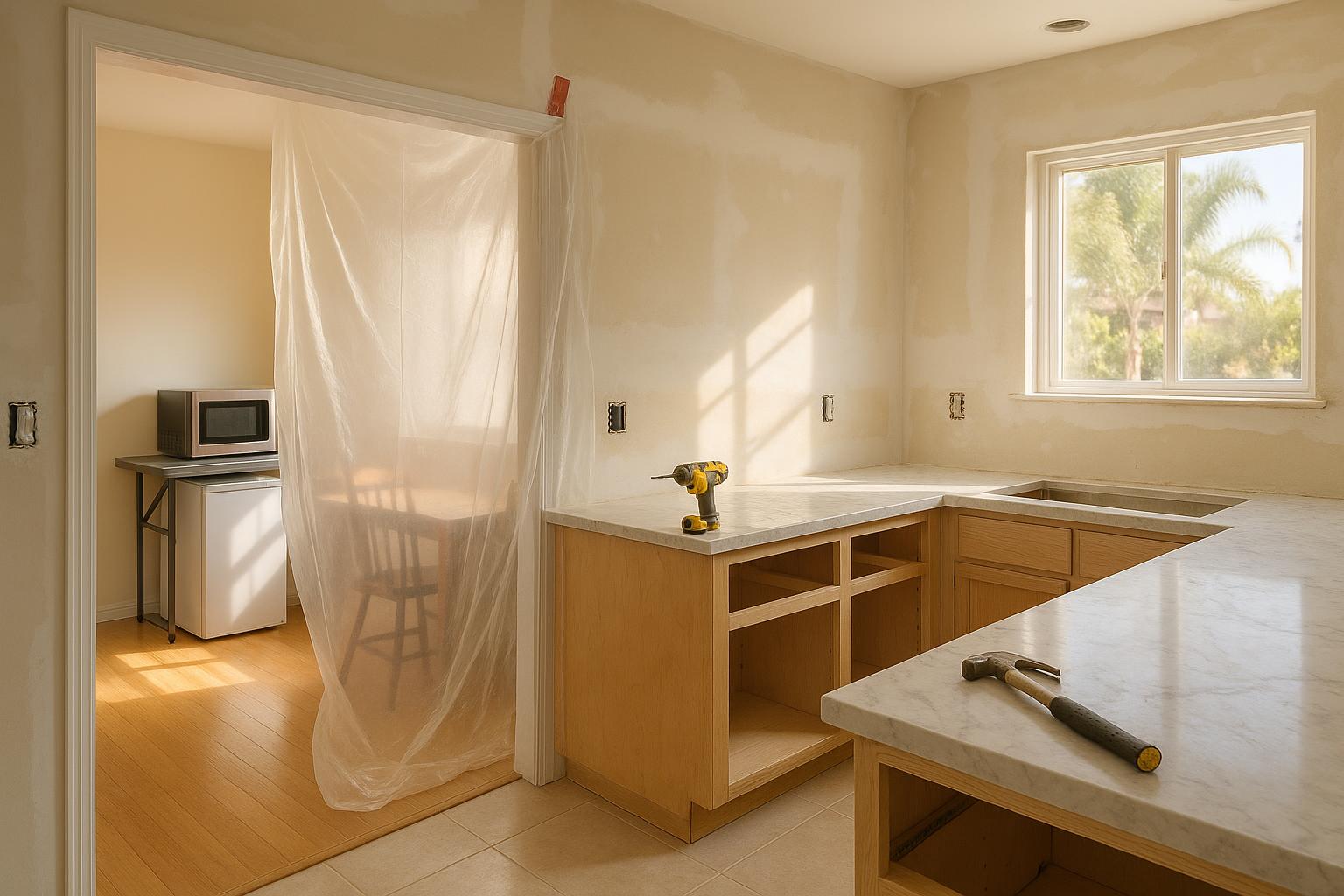
Construction dust is relentless. It finds its way into closets, electronics, and places you didn't know existed. A good remodeling crew will hang plastic sheeting and use dust containment systems, but you should also take steps on your end.
- Seal off doorways to living areas with heavy plastic and painter's tape.
- Roll up area rugs and store them away from the work zone.
- Cover furniture in adjacent rooms with drop cloths or old sheets.
- Change your HVAC filters more frequently during construction.
- Keep a doormat and shoe-removal station at the boundary between the construction zone and your living space.
Designate at least one room as a clean zone — a space that stays completely off-limits to construction. This becomes your retreat at the end of the day, and it makes a bigger psychological difference than you'd expect.
Plan Around Your Family's Routine
If you have kids, pets, or work-from-home schedules, the disruption goes beyond dust and noise. Think through the logistics before the project starts:
- Kids: Set clear boundaries about which areas are off-limits. Construction sites have sharp objects, exposed wiring, and heavy materials. Make sure younger children understand the rules.
- Pets: Dogs and cats can be stressed by loud noises and strangers in the home. Consider keeping them in a separate room, with a friend, or at daycare on heavy demo days.
- Remote work: If you take calls from home, coordinate with your contractor about the noisiest phases. Many crews in the San Diego area start early in the morning, so schedule important meetings for the afternoon when possible.
Communicate With Your Contractor — Often
The single biggest factor in surviving a live-in remodel is communication. A weekly check-in with your project manager keeps everyone aligned on timelines, upcoming disruptions, and any changes to the plan.
Good contractors will proactively tell you things like:
- "We're doing tile cutting tomorrow — it will be loud from 8 to 11."
- "The plumber needs to shut off water for about two hours on Thursday."
- "We're ahead of schedule and can start the flooring a day early if that works for you."
If your contractor isn't offering this level of communication, ask for it. You're not being difficult — you're living in an active job site, and you deserve to know what's happening in your own home.
Protect Your Valuables and Personal Items
Before construction begins, do a walkthrough of the affected areas and remove anything irreplaceable or fragile. This includes:
- Family photos and artwork
- Electronics and small appliances
- Jewelry, documents, and sentimental items
- Anything stored in cabinets or closets that will be demolished
Pack these items in labeled bins and store them in your clean zone, a closet in another part of the house, or a portable storage unit. It's much easier to pack carefully before demo than to dig through construction debris looking for your grandmother's serving platter.
Know When It Actually Makes Sense to Leave
While most remodels are livable, there are situations where temporarily relocating is the smarter choice. If your project involves all bathrooms being out of commission, extensive structural work, mold remediation, or a whole-home remodel that touches every room, a short-term rental or stay with family might be worth the cost.
In National City, El Cajon, and throughout the San Diego metro area, short-term furnished rentals are available for exactly this purpose. Even a one- or two-week stay during the most disruptive phase can dramatically reduce stress.
The Payoff Is Worth the Temporary Inconvenience
Living through a remodel isn't always comfortable, but it's temporary. Most kitchen renovations take four to eight weeks. Bathroom remodels often wrap up in two to four. And when the dust settles — literally — you're standing in a home that fits your life better than it did before.
The homeowners we work with across San Diego consistently tell us the same thing: "It was less painful than I expected." That's not an accident. It's the result of clear planning, honest communication, and a crew that treats your home like someone actually lives there — because you do.
If you're considering a remodel and wondering how to make it work with your daily life, we're happy to walk you through what to expect. Every home and every family is different, and the right plan makes all the difference.